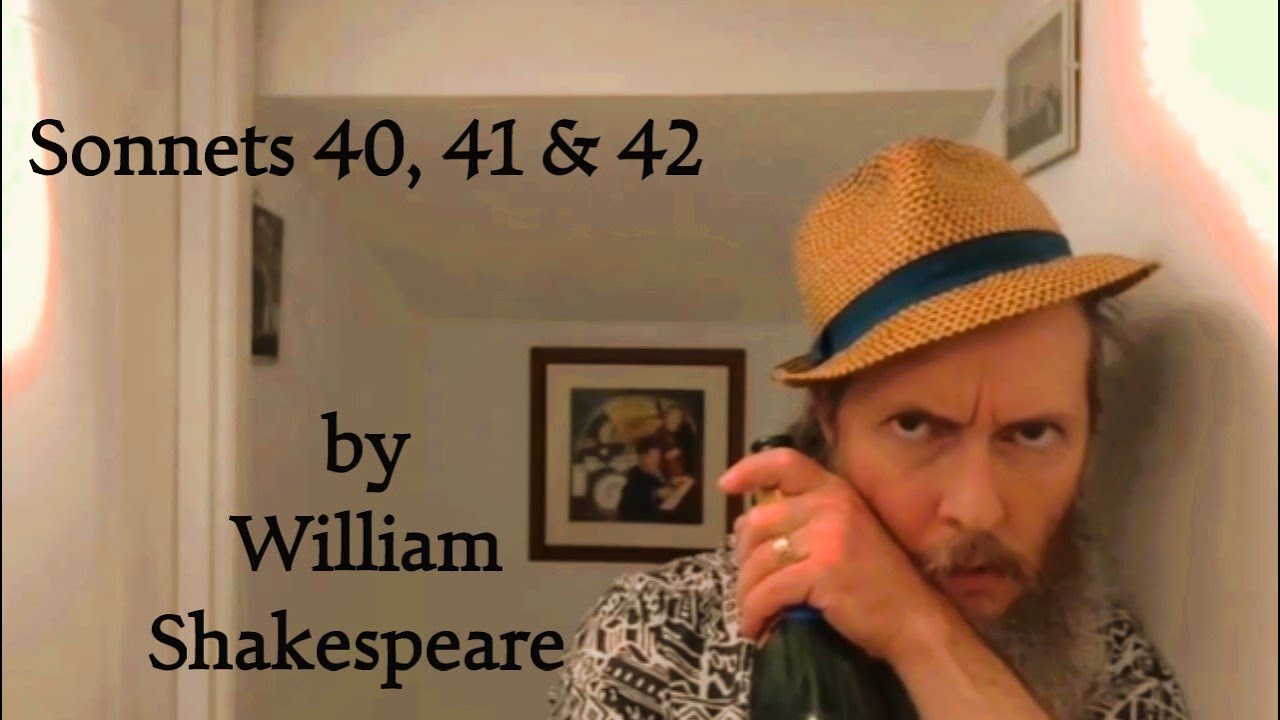
42 by William Shakespeare (read by Bruce Alexander) YouTube
Web.Clearbg.Online·
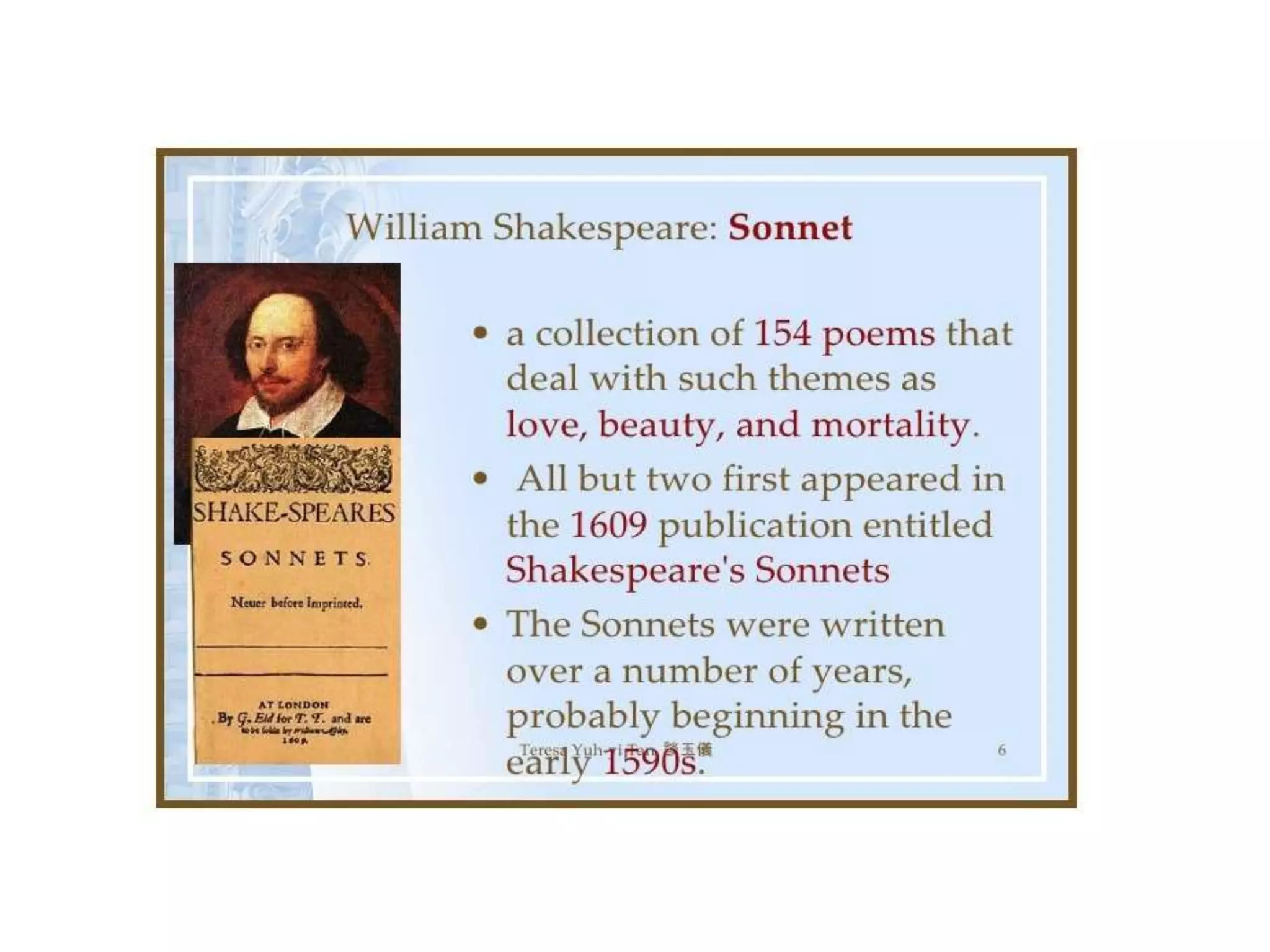
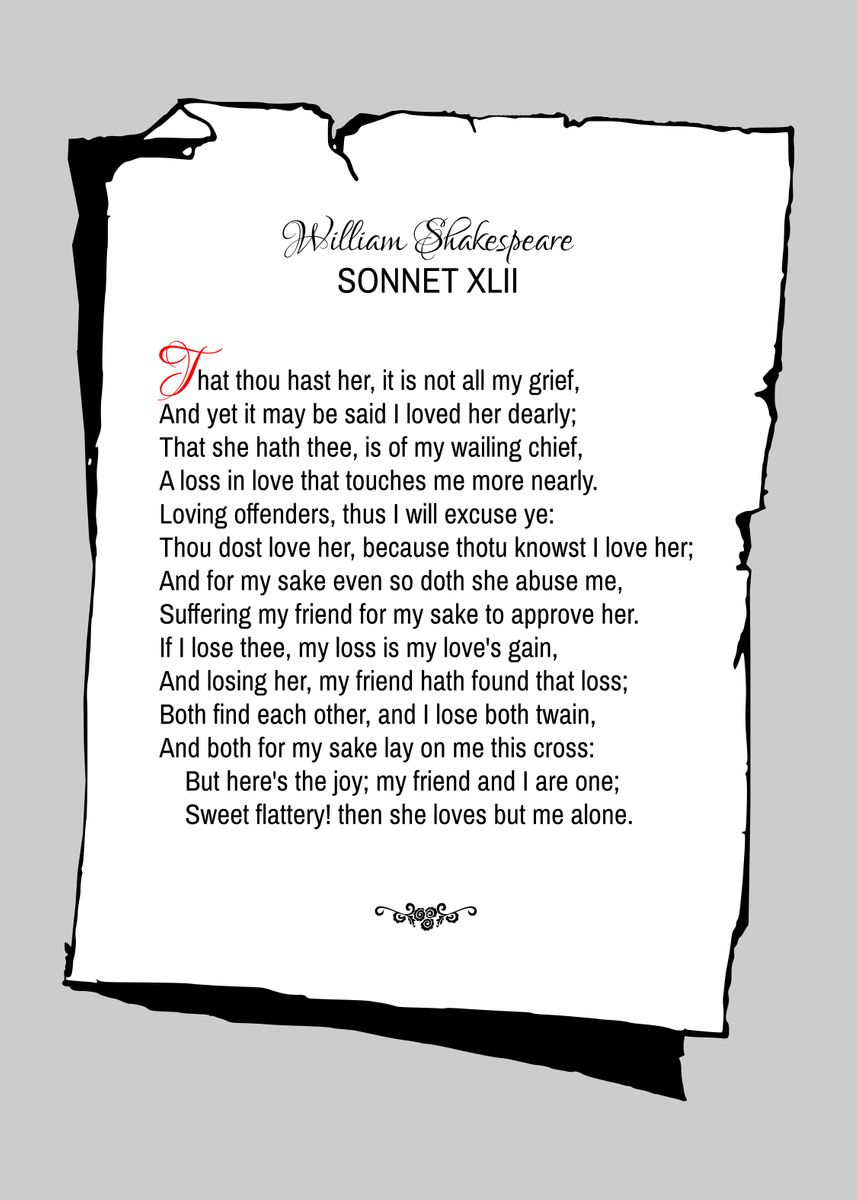
One of the 154 sonnets by Shakespeare from the collection Shakespeare's Sonnets (1609). Versions of Sonnet 42 include:. 42 That thou hast her it is not all my grief, And yet it may be said I loved her dearly, That she hath thee is of my wailing chief, A loss in love that touches me more nearly. Loving offenders thus I will excuse ye, Thou dost love her, because thou know'st I love her, And for my sake even so doth she abuse me, Suff'ring my friend for my sake to approve her. If I lose thee, my loss is my love's.
Shakespeare's 42 "That thou hast her it is not all42 (2014) — The Movie Database (TMDB)Shakespeare 40, 41 & 42 YouTubeShakespeare's 42 YouTubeNO 42 That thou hast her it is not allAnalysis of Shakespeare's 42 PDF Poetry42 by William Shakespeare (read by Bruce Alexander) YouTubeWilliam Shakespeare 42 shakespeare 42 Shakespeare Patrick Stewart Selftape 2020 4K YouTubeThe by William Shakespeare 3642 williamshakespeareShakespeare 42 That Thou Hast It Is Not All MyShakespeare 42 "Loving offenders thus I will excuse ye PDF42 That Thou Hast Her, It Is Not All My42 by William Shakespeare Poem Analysis🔵 That Thou Hast Her 42 by William Shakespeare SummaryShakespeare 42 by David McLean TPT莎士比亚十四行诗第42首“你拥有她,并不是我全部的悲伤”——猫头鹰 188jdc金宝搏Shakespeare Locked Down 42 "That thou hast her, it isThe Shakespeare Order Poems and Groups (Edition 1) (PaperbackWilliam Shakespeare's 42 YouTubeShakespeare's PPTX42 by William Shakespeare (Poem Guide + PDFs)William Shakespeare 42 YouTube42 That thou hast her it is not all my'Shakespeare 42' Poster, picture, metal print, paint by ArtWilliam Shakespeare 42 YouTube42 Explained Shakespeare on Betrayal & Poem Analysis42 by William Shakespeare in Hindi YouTube42 Shakespeare Line Line Hindi Urdu English MA English UOSReview 42 (William Shakespeare) Stripped Cover Lit Reader's
Read Shakespeare's Sonnet 42, 'That thou hast her it is not all my grief,' with a summary and complete analysis of the poem.. The speaker has lost both the beloved and the woman to each other, but consoles himself that their union is not his loss because the beloved and he are one—so really, the woman merely loves the beloved, who is the speaker.